Categories
Uncategorized

I Know They Do Big Bags Of Solace, But I Don’t Want Them

Living as I do these days in a cultural backwater, I didn’t get to see the new Bond film until last night. Although we had to wait for it, we haven’t been spared the hype, marketing, and product tie-ins, so it was surprising that given all that pre-publicity we were able to roll up to our local multiplex on the spur of the moment on the film’s Aussie release day and get tickets for that evening’s showing with no problems.

Now since everyone else has already had several weeks in which to see the film and form their own opinion, there is nothing original left for me to say about it. Of course it’s not as good as Casino Royale, but then I knew that beforehand and actually found it to be better than I was expecting as a result. If I were a lazy tabloid journalist reviewing the film, I might say that it was “packed with non stop action”, or something equally trite, and that some of it is a bit like the bits in the Bourne films with the jumping across rooftops and through balconies and houses in a picturesque old town. Unfortunately they seemed to have forgotten to include a properly fleshed out story. When it suddenly came to an end, with the bad guys having been disposed of without too much difficulty (oops. sorry–spoiler alert…), I found myself sort of thinking: “is that it?”

But mostly I came away from the cinema wondering what part of Bolivia that was supposed to be, with all those perfectly tarmacked roads. I guess they thought that if they didn’t film in Bolivia itself, most viewers wouldn’t notice. But their “La Paz” looked nothing like the real one, being neither at altitude nor on the side of a hill (Wikipedia tells me that this is because those scenes were filmed in Panama). And I’m not sure I saw a single building anywhere in Bolivia that was quite as plush as the hotel that Bond apparently stayed in.

But it’s the roads that are the dead giveaway: roads in Bolivia are a pot-holed, bumpy mess, and not the sort of thing you’d want to subject an Aston Martin to. And they certainly don’t have pristine road signs dotted along them. In fact, I thought to myself, the bit at the end looked a lot like the bit of Chile that we crossed into after our tour of the salar de uyuni, where the disparity in road quality was one of the first things I noticed, and this turns out to be because it was indeed filmed in the Atacama desert. Which is close, I guess, given that this part of the world was actually in Bolivia, once.

I did notice one nod towards Bolivian reality, though. When Felix Leiter and James pop out for a beer in La Paz it looked remarkably like they were drinking Paceña Gold, which is a real Bolivian beer (and probably the only one you can buy outside the country). I’m surprised it wasn’t Heineken or some other western brand who’d paid a fortune for some product placement, but I don’t think that the type of bar they were at would be selling the Gold version; it’d be much more likely to be the bog standard white label Paceña pilsner. And in poxy little chica bottles like that? Nah. Bolivian beer is mostly sold in whopping 600-odd ml affairs, although perhaps that would have made it too difficult for the actors to keep the labels carefully covered up, as they did throughout the scene (hardly surprising really, as I can’t imagine that the Bolivian national brewing company would have paid to have their brand appear in the film…)
Categories
Uncategorized

The Land Down Under

As my ongoing photo a day project will attest, we’ve now been in our new home in Australia for six weeks, and now that I’ve finally got round to blogging the rest of our amazing South America trip, I can start to talk about the real world, insofar as we find ourselves back in it.

After a few days back in Southport, the final legs of our journey took us briefly back to London, then on to Singapore and finally Melbourne, where everyone except for us, it seems, is either getting married, having kids, or has already done one or both of those things.

So far, we have completed only two-thirds of the back-to-the-real-world life trifecta: we’ve both managed to find employment and so are able to start replacing the savings we splurged in South America, and thanks to a brief upturn in the pound/aussie exchange rate that saw us transfer some cash over at almost $2.50 to the pound a few weeks ago, we have bought the car that is sadly a necessity in a spread out city like this one, but with most of the rest of my savings languishing in a heavily depressed index tracker that’s been faithfully following the FTSE’s recent journey downwards, the house might have to wait a while, and so for the moment we’re staying with Sal’s folks.

I don’t think we’ve outstayed our welcome yet, but then Sal was away for six years, so that’s got to buy us a few months before we need to find our own place.

*

I’ve nearly been in my new job for a month now, and working life in Australia appears to be much the same as it was in London, albeit for me personally with a longer commute and a slightly smarter dress code than I’ve been used to.

One interesting difference is that, for no discernible reason, my new employers choose to pay their staff on a weekly basis. It’s very odd.

My first payslip was emailed to me a few days after I started, showing my annual salary recalculated as an hourly rate, and applied to the precisely 22 hours and 48 minutes that I had apparently worked since starting (it took me a while to work out where that figure had come from, since I don’t have to clock in and out, but of course it’s just three fifths of a 38 hour week).

Best of all, my first payslip informed me, I’d accrued 1 hour and 46 minutes of annual leave. I won’t be using that all at once, now.

*

I remember when I used to commute in London that occasionally you’d be joined in the carriage by some holidaying Aussies who’d be loudly complaining to each other that no one talks to each other on the tube. “Why’s everyone so miserable?” they’d ask.

So now that I commute to and from work every day on Melbourne’s own public transport, it’s a pleasant change from London to experience the joyful world where people strike up conversations with random strangers and everyone’s just happy to be there.

No. Of course not.

Commuters are miserable the world over, no matter how friendly they might be in other social circumstances or how sunny it might be outside. If anything, the fact that it’s a glorious sunny day out there just makes it worse that you have to go to work rather than the beach.

The other day I was joined in my packed train carriage on the way into the city by a couple of middle class white teenagers looking a bit miserable and pretending to be hard while cranking up the volume on their mobile phone speaker so that the whole carriage got to listen to some rubbish sounding tinny music. It was just like being on a London bus, and despite the fact that it was clearly annoying to everyone in the carriage, of course no one said anything to them. Just like London.

When they pushed their way through the standing commuters and off the train at North Melbourne, one of the middle class white teenagers brushed against a businessman who was standing near the door. Obviously feeling affronted in some way and realising that this was the perfect opportunity to show just how hard he was, the middle class white teenager involved turned to the businessman and said something like “You wanna back that shit up? Huh?”, then paused briefly inside the train carriage before getting off and making an angry face back at the guy on the train. It was, shall we say, rather amusing.

There is one part of my commute that comes close to the ludicrous idyll imagined by those holidaying aussies in London who’ve probably never used the public transport system in their own home in their lives–the bus I catch in the mornings to take me from the end of the street to the local train station, and then again in the evenings to get back. Not only do the drivers wait at the stop by the train station for the train to come in before leaving, they smile and say hello to you, remember the names of some of their passengers, wait for people when they see them running for the bus, and actually open the doors early when they are on the way to the station if they get stuck at the traffic lights around the corner so that the commuters can dash over the road to catch the next train instead of missing it while the driver waits for the lights to change so that he can pull up at the stop.

It’s not quite like that on London buses, is it?

*

Of course I miss our old London friends and our old London life in general, as much as anyone living there while the city struggles into winter might find that hard to believe, but then I knew that was going to be the case when we left. I’ve been clinging to the bits of home that I can–picking up my Weekly Guardian from the newsagent at Flinders Street on a Thursday morning, reading the Private Eye that finds its way across the world and into the letterbox every other week, and taking the edge off that commute by listening to the Collings and Herrin and Adam and Joe podcasts–but being in Melbourne in Spring has its advantages.

We’ve just had the annual Spring Racing Carnival, for starters, during which two weeks of horseracing just down the road at the Flemington racecourse stops the whole nation. I don’t have any particular affinity for the sport, but it means standing in a field and drinking in the sun, which is always a fun day out.

And of course, there are the beaches and barbies. It might be a cliché, but it’s still good.

Categories
Brazil South America

To Iguazu And Beyond

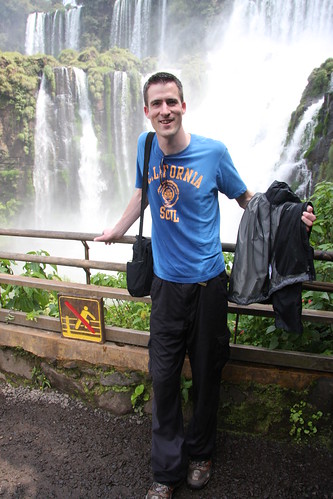
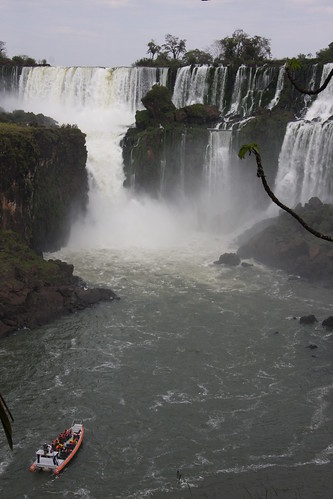
We spent two full days at Iguazu Falls in the end. One on the Argentine side, where you can get close up and very, very wet by taking a boat right underneath the waterfall itself (aftermath pictured below), and one on the Brazilian side, where you get the full panoramic view of the falls in all their glory.

Post Drenching, Iguazu Falls

We did our best to avoid the crowds, by catching a ridiculously early bus to the Argentine side on the first day and then rolling up casually late to the Brazilian side on our second day, but even when we found ourselves dawdling behind a tour group of pensioners walking single file along the trails we still couldn’t help but be wowed by the thundering watery glory of it all.

Boat Trip, Iguazu Falls

At over a thousand kilometres from Buenos Aires to the falls, our final overnight bus journey of the trip had also been one of the longest, but as we’d once again paid to travel in style on plush and very spacious reclining seats, we weren’t too tired when we were deposited in tiny, tropical Puerto Iguazu the next morning. As well as visiting both sides of the falls, we also took the opportunity to walk to the edge of town, where the Tres Fronteras lookout lets you see three countries from one spot.

Argentina, Paraguay and Brazil, Tres Fronteras

Sadly, despite being one of the highlights of the trip, our stay in Iguazu was also tinged with sadness for us, as it marked the end of our affair with Argentina. On our last evening in town, I somehow found room for one more bife de lomo, and then that was that. The next morning we caught a cab to Brazil: at the midway point on the bridge that forms the border, the Argentine blue and white painted on the sides gives way to Brazil’s green and yellow. I turned to Sal and wondered aloud if we’d ever eat steak as fine as that again…

*

The final two weeks of our trip passed in a blur, starting with a few days in Rio, where we stayed just a coconut’s throw from Copacabana and Ipanema beaches. Sadly, for the first time in our trip, the weather didn’t quite cooperate, but it still didn’t stop us from ticking off the standard tourist attractions: including Pão de Açúcar and Christo Redentor. When we rolled up to buy tickets for the train up to see Christo, the weather was so bad that the guy at the ticket window even told us we wouldn’t see anything. “It’s cloudy” he said, as if we hadn’t noticed. Given that we had no other days left, weren’t going to be coming back to Rio any time soon, and had already trekked all over town to get to the bottom of the mountain, we decided to take a punt anyway, and we were glad we did. When we got off the train at the top, it was so cloudy that we could barely even see the top of the statue from the bottom of it. It actually seemed rather appropriate to be up in the heavens with Christo, but then all of a sudden the clouds parted to reveal the glorious city below, before closing again almost as quickly as they had opened, with the pattern repeating at regular intervals. (And every time the train deposited a new set of arrivals at the top of the mountain, we would watch amused as they saw the clouds part for the first time, as we had done, and rushed to the edge to grab their photos of the city, before slowly realising that exactly the same thing would be happening again when the clouds parted again just a few minutes later).

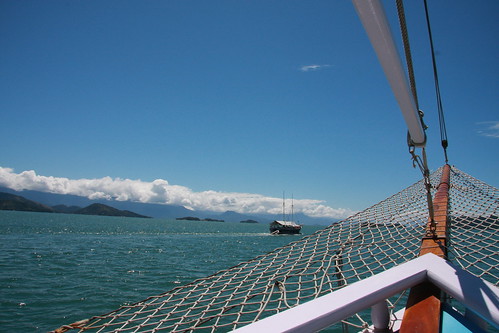
From Rio, we caught the bus to the lovely little idyllic colonial town of Paraty. After hiring bikes again and getting ourselves caught in the torrential rain, then riding up the world’s steepest hill (2 hours up; 10 minutes down), we waited for the sun to come out before indulging in Paraty’s other main attraction. When the sun finally chose to cooperate, though, we didn’t hesitate to jump on a boat and sail off to some of the nearby beaches, serenaded by a chap on board with an acoustic guitar playing “Brazilian pop music”.

On The Water In Paraty

On our last night in Paraty, with only a long bus journey to Sao Paulo separating us from the end of our trip, we grabbed a quiet dinner at gimmicky but nice flambé restaurant (they stopped short of flambéing the menu, but that was about it…) and got an early night. Many hours later, we were woken by some very rude people who came in at about 3AM and suddenly started making all sorts of noise. We eventually got back to sleep, but, Sal tells me, I inadvertently got my revenge. Apparently, many hours later when the noisy people had come back and gone to bed, I’d been snoring so loudly that they’d been banging on our wall to try to get me to shut up.

I felt very proud of myself.

*

The trip to Sao Paulo was long, but largely uneventful. Apart from the fact that as we pulled out of town we paused at a fire station, where a big burly chap in uniform got on. I assumed that he was going to check our documents, like the police who’d sometimes got on our buses in Peru, but that turned out not to be the case. Apparently his job was just to put on the in-bus DVD, Rugrats in Paris. Once he’d carefully selected the Portuguese soundtrack, his job was done, and he hopped off the bus a short while later.

*

For the final two days of our epic four month journey, we checked in to one of the most expensive hotels in town (our final two nights’ accommodation cost almost as much as our entire month’s stay in the apartment in BA…) and basically didn’t leave.

And then that was that: many hours on the supremely uncomfortable Swiss Air flight back home later, we were on the ground in Manchester wondering what to do with our lives now that it was all over and the real world beckoned…

Categories
Uncategorized

Thank You America For Making The Right Choice…

Yay! I win at betting:

Free 2.00 GBP Bet US Presidential Election 2008 Barack Obama @ 7/1

Categories
Argentina Buenos Aires South America

Buenos Aires: Slight Return

So what do you do if you unexpectedly find yourself back for one last weekend in your favourite place on the entire continent?

We couldn’t quite believe we were back. As the taxi took us across town to Palermo I started to think about all the bonus stuff we were going to be able to do. The lovely little hotel we’d booked into at the last minute was on the corner of Carranza and Gorriti, which wouldn’t have been an ideal location for a first time visitor to the city, but was perfect for us–stumbling distance from all our favourite bars and restaurants, around the corner from Olsen and the No Brand shop, and a short walk across the tracks to Palermo Soho.

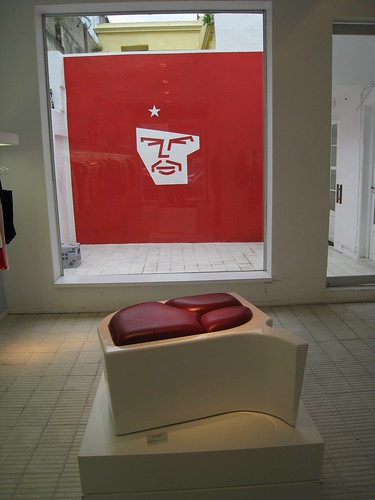
Of course we couldn’t leave BA again without revisiting La Cabrera, home of the finest steak in town, so one of our first tasks was to book in for dinner. We also booked in for Sunday brunch at Olsen, and I went back to the No Brand shop (where the girl behind the counter recognised us) to buy their El Che T-Shirt. It was like our own personal BA Greatest Hits compilation.

7th September 2008: El Che and Bife Chair, No Brand Shop, Palermo

We didn’t feel under any obligation to do any more tourist stuff, but did tick one final item off the list by visiting the Carlos Gardel museum over in Abasto. It was very interesting and, I thought at the time, very reasonably priced at just a peso. It was only much later that I looked at the tickets and spotted that we’d been charged the Entrada Residente, the price for locals, which made me very happy…

But all good things have to come to an end. And there is, after all, only so much steak you can eat and only so much Mendoza Malbec you can drink. And so our weekend came to an end and we left Buenos Aires for good on the night bus. We were heading 1200 kilometers north, where Iguazu falls, Brazil, and the last three weeks of our journey were waiting for us.

Categories
Argentina Buenos Aires South America Uruguay

So Where Was I? Oh Yeah…

And so August, as it has a way of doing, came to an end and we were forced to leave lovely Buenos Aires to continue our travels. On our last day in the apartment we got up early to clean the place, popped out for a last lunch just down the street, and went back to wait for our landlady to come over so that we could swap the keys for our deposit.

Luckily, we’d anticipated that she’d be late, so even though I had to give her a call 30 minutes after she was supposed to be there–to find out that she was “just leaving now”–we still had plenty of time to get our money back and then get ourselves over to the shiny Buquebus boat terminal for our afternoon trip across the Rio de la Plata. And a couple of hours later we were in pleasant, laid-back Montevideo. After a small drama getting hold of Uruguayan Pesos (“why are we the only people in this situation?” we’d wondered, as we stared at the “out of service” message on the only ATM in the terminal in Montevideo–it was only later that we realised that it was Sunday night, and so everyone else on the boat had been Uruguayan and returning home after spending the weekend in BA…) we found our hotel and settled in to a few days in the capital.

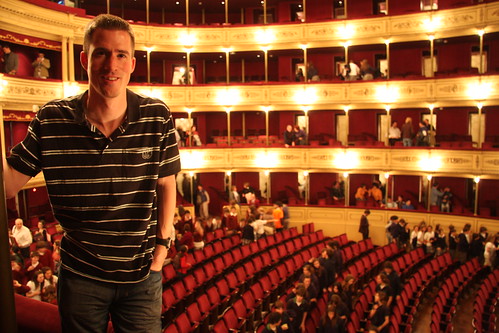
1st September 2008: Teatro Solis, Montevideo

Having failed to get into the still-closed-for-renovation Teatro Colon in BA, we did our best to make up for it after stumbling upon an free performance at Monetvideo’s equally impressive equivalent, the stunning Teatro Solis. It was great, even despite the fact that the bulk of the audience for the free afternoon recital by a visiting German orchestra was made up of clearly disinterested local schoolkids who were more into talking to each other than the music, and also despite the fact that the guy sitting just along from us had failed to understand the concept of “no photography”. It may have been perfectly timed to hit the break in the music, but I’m pretty sure Wagner’s original vision hadn’t included the the accompaniment of a mobile phone camera shutter…

2nd September 2008: Biking in Montevideo

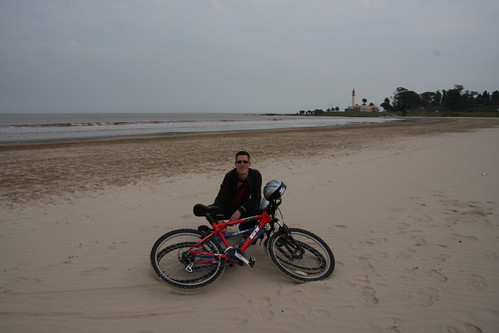
With 20 or so kilometres of coastline, mostly bordered with a nice wide jogging/biking track, Montevideo also provided us with another chance to get on our bikes and go for a ride. We rode for miles, past empty sandy beaches and through quiet seaside resort suburbs that would be packed in summer. We ate some amazing seafood at the Uruguay Yacht club looking out over the bay before turning around and letting our weary legs cycle us back to the hotel.

After a couple of days in Montevideo we caught a bus along the edge of Uruguay to pretty little Colonia, and almost instantly realised that we’d badly miscalculated in our planning. We thought we’d stay there for a couple of days, but as nice as Colonia was, it was immediately obvious that you could see the entire town in about 30 minutes. And it didn’t help that our hotel room was small, shabby, and nothing like the pictures on the hotel website.

“Why don’t we go back to BA?” I suggested.

And so that’s what we did. 5 minutes later we were at the boat terminal changing our ticket so that we could jump on the first boat the following morning, shortly after that we were on the internets booking ourselves into a posh looking hotel in Palermo Hollywood for the weekend, and shortly after that we were running around town taking our photos of Colonia before the sun set.

We were both excited, though: we had a bonus weekend in the best city in South America to look forward to.